Most businesses don’t fail overnight.
They don’t collapse in a dramatic blaze of headlines and lawsuits.
They drift.
Slowly. Quietly. Almost invisibly.
And by the time revenue drops, margins shrink, or key people leave, the real problems have usually been in place for months, sometimes years.
After building, fixing, and leading companies across multiple industries, I’ve learned this:
There are always warning signs.
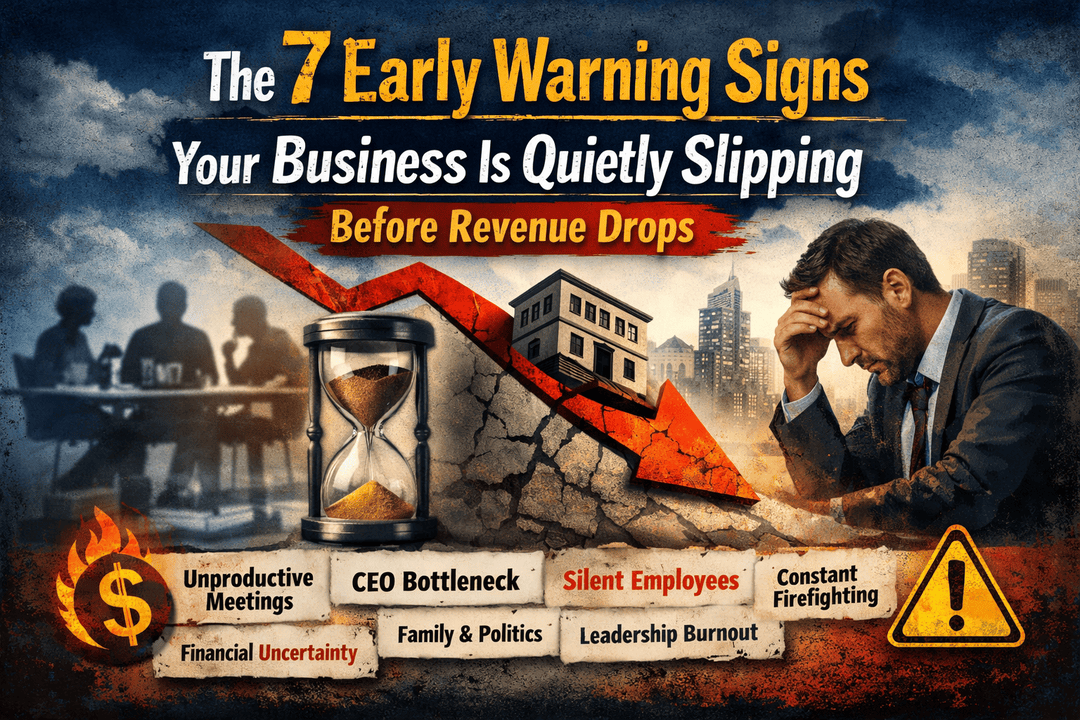
Here are seven of the most common ones I see long before the numbers show trouble.
1. Meetings That Produce Activity, Not Decisions
You’re meeting regularly.
You’re talking a lot.
Everyone seems “busy.”
But nothing actually moves.
No clear ownership.
No firm deadlines.
No accountability.
When meetings become status updates rather than decision-making forums, momentum starts to leak out of the organization.
Quietly.
2. The Founder (or CEO) Becomes the Bottleneck
Every major decision runs through you.
Every problem lands on your desk.
Every exception needs your approval.
At first, this feels like leadership.
Over time, it becomes a constraint.
When the business can’t move without you, it’s already slowing down — whether you realize it or not.
3. Good People Stop Speaking Up
This one is subtle.
Your best people still show up.
They still do their jobs.
They’re still “professional.”
But they stop challenging ideas.
They stop offering improvements.
They stop fighting for better ways.
Silence is rarely a sign of harmony.
It’s often a sign of disengagement.
4. You’re Always “Putting Out Fires.”
Every week feels urgent.
Every month feels reactive.
Every quarter feels like survival mode.
There’s no breathing room to think strategically — because you’re constantly managing the latest crisis.
When firefighting becomes normal, leadership becomes impossible.
5. Financial Clarity Starts to Get Fuzzy
You still “look at the numbers.”
But not deeply.
Not confidently.
Not proactively.
Cash flow feels tight more often.
Margins are harder to explain.
Forecasts become guesses.
When leaders lose intimacy with the financials, risk multiplies quietly.
6. Family, Politics, or History Start Driving Decisions
In many owner-led and family businesses, this is where real damage begins.
Roles blur.
Emotions leak into operations.
Past grievances influence current choices.
Decisions stop being made based on what’s best for the company — and start being made based on relationships, guilt, or avoidance.
That’s a dangerous shift.
7. You’re Tired — But You Can’t Admit It
This may be the most important one.
You’re still performing.
Still showing up.
Still carrying the load.
But internally?
You’re worn down.
Less patient.
Less curious.
Less energized.
You tell yourself: “It’s just a phase.”
Sometimes it is.
Often, it’s a warning.